Rick van der Ploeg On Natural Resources & Climate Policy
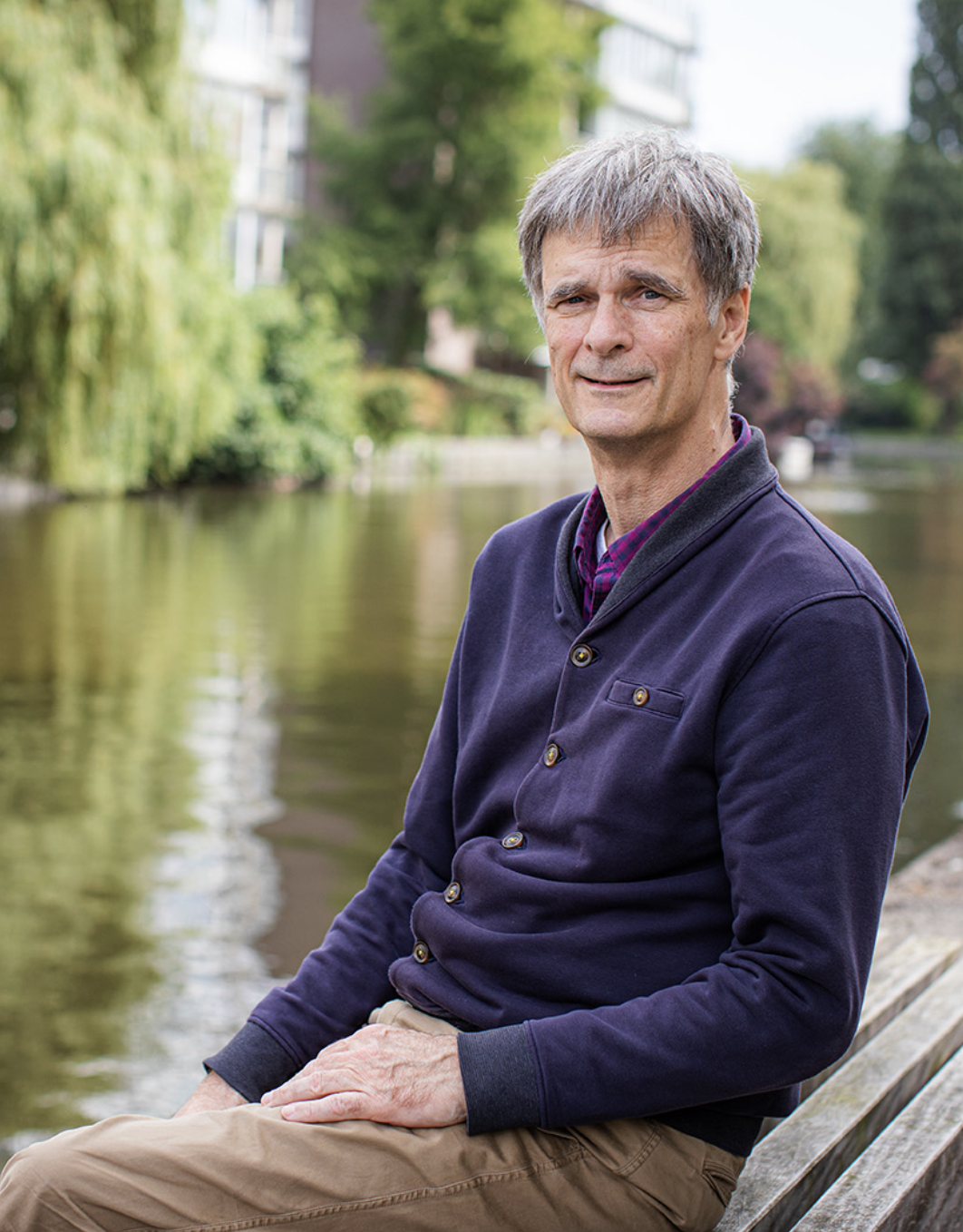
Rick van der Ploeg is Professor of Economics at New College, University of Oxford & Research Director of the Oxford Centre for the Analysis of Resource Rich Economies. He has also served as a Member of Parliament and State Secretary in the Netherlands & as Vice Chair of the UNESCO World Heritage Committee.
By Aiden Singh, June 29, 2026
Institutions, Incentives, and the Resource Curse
Aiden Singh: Let’s start with the topic of natural resources. The natural resource endowments of countries are generally treated as exogenous in models of economic development, but you present a more nuanced and complicated story.
You’ve conducted research into the role of countries’ market orientation and its relationship to hydrocarbon and mineral discoveries. What did you find?
Rick Van der Ploeg: Yes, that is an extremely important topic. In the old days, in places like the United States, property rights were relatively free and clearly defined, so that if you started drilling, you could keep the resources yourself. That created enormous incentives for people.
So basically, you could invest and reap the returns from your investments in oil or gold or whatever natural resource. That led to huge booms in America at that time.
However, if you now look at places such as Africa, property rights are often not properly defined. They may be defined when you are drilling or mining, but after a while many of these countries become corrupt or people engage in rent grabbing. So why would you invest? That means private investors come and go.
Consider countries such as Venezuela and many developing countries like it. There is a huge amount of mineral resources that have not yet been extracted in many of those countries because they do not have strong institutions, a strong rule of law, or stable politics.
As a result, many countries that are very wealthy in natural resources have been unable to transform that into above ground wealth.
Ideally, you dig up the wealth from below and put it into health, education, sewer systems, hospitals, or into an international sovereign wealth fund, like the Norwegians have done.
But if you do not do that, you are squandering it. You are consuming it or you become conflicted over it.
Then you get governments such as in Ghana, which is not the worst case, but which has been suffering from this resource curse. You get a government, it builds political clienteles, then it gets kicked out, and the next government helps its own clientele.
We see something similar in Nigeria. Politics has been geared in that direction.
Suriname has now discovered resources, thankfully offshore. Offshore is less prone to this type of capture than onshore, but it remains to be seen what happens. I would like to be optimistic that every citizen of Suriname will become very rich and that public facilities will improve greatly. But we know, from other countries, that this is nice in theory, but in practice it often does not work out that way.
There is a predicament economists refer to as Dutch disease. Here, a country exports a large amount of goods abroad and that typically leads to an appreciation of the real exchange rate. The appreciation of the real exchange rate means you become less competitive, so your export sectors decline and your non-tradable sectors expand. Basically, people move from one sector to another. But since most of the engines of growth are in the tradable sector, a temporary resource boom can lead to permanent losses in welfare. This is a major issue.
And I should add that we now see this playing out with critical minerals. Critical minerals are essential for the green transition, but they are also essential for many other things, including factories, electric cars, mobile telephones, and much more. Many of these critical minerals are found in politically unstable countries.
Some of these are very poor countries. You can think of Congo as the Saudi Arabia of critical minerals. But many of the mines are not open, or they are open illegally, where the government has no control. Together with Samira Barzin and Rabah Arezki, we looked at geospatial mapping using AI, and found a lot of extra mines that were not in the data sets
So critical mining is even more prone to conflict. Natural resources have often led to wars and conflict, both local conflicts and larger wars. And we may see the same pattern with critical minerals.
Aiden Singh: Do we know why offshore extraction is less susceptible to some of these issues than onshore extraction?
Rick Van der Ploeg: It is a bit more difficult to steal. For example, in Nigeria, one can literally hack a pipeline, tap it, place the oil in a container, and take it abroad. If one is a local army general, one might do that. One sometimes ends up living in a very expensive apartment in New York or London.
Aiden Singh: How does the discovery of new oil reserves shape tariffs and protectionism?
Rick Van der Ploeg: I think the broader geopolitical environment is now shifting.
This shift is not only about Trump - these dynamics were already developing before him. But they are becoming much more pronounced.
Countries increasingly realize that if they possess a particular resource, technology, or niche that others need, they can use it to pressure other countries.
I have long supported a liberal view of trade, namely that trade benefits everyone, as Ricardo argued.
But that world has changed. This is not only because of Trump. Russia has often found it useful to threaten to cut off gas if other countries do not behave in a certain way. China has done something similar. It may restrict access to critical minerals, as it did in response to Trump, and then a great deal of your production structure can collapse because those inputs are essential to economic production.
The Netherlands is a useful example. I am half Dutch. The Netherlands has this major semiconductor equipment firm, ASML. There are only a few such firms in the world, with one in Taiwan and one in the Netherlands. The Americans have placed substantial pressure on the Dutch to prevent sales to China. Although the Dutch were initially somewhat uncertain, they ultimately became susceptible to that pressure and did not sell the most critical technologies to the Chinese.
These are all forms of tit-for-tat technological rivalry. It is not so much tariffs in the narrow sense, but rather the denial of critical exports to rival countries. That is happening all over the world now.
I should also add that natural resources and critical minerals lie at the root of many of the international conflicts we see today.
Consider Ukraine. Ukraine has a very large number of steel factories and is also one of the major food producers in the world.
Gaining access to those resources matters greatly. The same logic applies to Gaza, where water scarcity is also central. In a context where water is scarce, control over it can be highly valuable.
- - - - - - -
Climate Change Policy
Aiden Singh: Related to the topic of hydrocarbon extraction is the topic of climate change. You have suggested that even if we take climate skeptics’ doubts about climate change into account when formulating environmental policy, carbon taxes are still a good idea. Can you elaborate on that argument?
Rick Van der Ploeg: Yes, it is an important point. You may know the story of Blaise Pascal, the famous philosopher, and the question of whether one should believe in God. His argument was that if the consequences of being wrong are very large, then one should act in a way that protects against the worst outcome. If one does not believe, does not go to church on Sunday, and does not behave accordingly, one may go to hell and not to heaven. The expected cost of being wrong is therefore so high that one might as well believe in God.
It is similar to climate change. If you do not do climate policy and you are wrong about global warming, you may lose 20 to 30 percent of global GDP. The entire economic system could be damaged. That is already happening, but it may happen much faster, and the process is highly non-linear. These are enormous costs.
If, by contrast, the climate skeptics are right and you have imposed carbon taxes, then you can simply remove them. The cost is perhaps 1 or 2 percent of GDP. That is costly, but not nearly as costly as ignoring the scientists and being wrong. From a maximin perspective, meaning choosing the best option under the worst plausible outcomes, one should therefore adopt a very ambitious climate policy.
It is better to stay on the safe side, especially because the costs of inaction are so large.
The probability that the climate deniers are correct is very small anyway. Most climate scientists believe that there is a major problem. Even if one were to adopt a more conservative estimate, the case for ambitious climate policy would still be overwhelming.
Aiden Singh: You have also calculated the delay period during which action can still be taken on climate to ensure that global warming remains below the Paris Agreement targets. What did you find?
Rick Van der Ploeg: These calculations were done a few years ago, so we now have to consider the current situation.
The concept involved is the carbon budget - that is, how many more tons of carbon dioxide we can emit before exceeding the limit. The question is whether one wants to remain under a one and a half degree cap or a two degree cap, and how much more can still be burned without going above it.
When I did those calculations, the answer was about seven years before exceeding the 1.5 degree cap and about ten years for the two degree cap, depending on the assumptions used.
But I think we are there already now. Climate scientists say that we may be very close to exceeding the cap within the next one or two years.
We already passed one degree last year on average, although one can take a more cautious statistical approach and argue that there may have been a fluctuation. Still, most people in climate science tend to think that 1.5°C will definitely be passed within the next four or five years.
That means we are in a very serious situation. And one must not forget that to stay below 1.5°C, emissions must really come down completely. They have not done so yet. Emissions are still rising. Perhaps they may begin to fall in two or three years, but it takes 20, 30, or 40 years for emissions to reach zero.
In those calculations from the IPCC, the international climate body, there is also an enormous reliance on technologies that do not yet exist. They are relying on negative emissions technologies and direct capture technologies that remove carbon dioxide from the atmosphere and bury it deep underground. But that technology is not yet mature and it is certainly not cost efficient.
So emissions will probably continue rising toward 1.5°C, perhaps even 2°C, and maybe beyond that, until those technologies arrive.
Meanwhile, we do not see enough actual action on climate.
In the United States, the direction is almost the opposite. The message is “drill, baby, drill.” Many companies have removed references to their green transition plans because otherwise they may be targeted by the Trump administration. If one now looks at American firms, most no longer include sections explaining how they intend to reach net zero.
The European response is also changing. European firms are beginning to think that if they do not respond, they will not remain competitive. So the Trump administration has been a major negative force for climate policy.
At this point, we can only place our hope in a coalition of the willing, meaning the Canadians, the Europeans, and perhaps the Chinese.
China is much further ahead on renewables. It still uses coal, but coal is being phased out. China is the global leader in renewables. That is what has to happen.
And, as some humanitarian and development experts would say, we should never have gone above one degree, because most of the costs above that level are borne by the poorest people on the planet. It may not seem so bad for Europe yet, but it will become worse. There will be flooding, extreme weather events, and likely changes in the Gulf Stream, which is already shifting somewhat. It is fragile. These are climate tipping points.
I think policy has to be enacted. In the United States, some states do good work, but at the federal level the effort has essentially disappeared. Even the Environmental Protection Agency has been weakened and many people have been dismissed. That is extraordinary.
The United States will suffer from this as well. One concept that is relevant here is the social cost of carbon, which measures the damages caused by burning one ton of carbon dioxide. For a long time, people thought it was around $50. Under Bill Nordhaus, when he received the Nobel Prize, the estimate was about $15. More recently, people have thought the best estimate is around $200 per ton of carbon dioxide. A paper by a group responding to a challenge set by President Biden arrived at that figure. But more recent work by scholars at Northwestern and Berkeley suggests it may be closer to $1,200.
The reason is that if one does not only consider gradual damages to health, agricultural crops, and related outcomes, but also prices in tipping points and the increased probability of climate tipping points, the carbon price rises sharply. Those tipping points include the melting of Greenland, the drying of Siberian peatlands, and changes in the Gulf Stream. If one prices all of that in, the carbon price could rise by a factor of five, six, seven, or eight. If one also prices in the frequency and intensity of extreme weather events, the result is even higher. At two degrees, the frequency of such events may increase by a factor of five to eight. That is enormous.
So if one truly wants to price in those risks, the carbon price must be much higher than it is now. People are not very good at accounting for these kinds of risks, but it is part of my research. The appropriate price may be somewhere between $200 and $1,200 per ton, but certainly much higher than the current average.
- - - - - - -
Climate Change & Finance
Aiden Singh: You’ve written about how these climate risks affect stock markets. What does your research show?
Rick Van der Ploeg: There are two types of climate related risks: physical risks and transition risks.
Physical risks include increased storms, increased floods, and increased desertification. These tend to produce negative stock market returns. Stocks exposed to such risks are therefore more risky, and they must offer a higher expected rate of return to attract investors. If they must offer a higher return, then they are worth less. The effect of climate risk on stock markets is therefore quite clear.
This also affects insurance companies and banks. It is not only the firms themselves but also the providers of capital and insurance. If banks are heavily exposed through risky portfolios, or if reinsurance companies are heavily exposed to physically risky assets, they will also run into trouble.
One could argue that firms with a greener profile and less brown exposure may deserve a slightly lower risk premium. That could at least create some incentive for firms to become greener. It is not enough on its own. Carbon pricing is still necessary. But it does provide some incentive.
The transition risk is different, and perhaps even more important. The issue there is uncertainty about policy. In the United States, everything is brown at the moment, but in a few years Trump may be gone and climate policy may become much more ambitious again. In Europe as well, policymakers may respond to the challenge. If firms invest heavily in brown stocks, brown infrastructure, or carbon intensive machinery, those assets become more vulnerable. They are riskier, they require higher returns, and they are worth less in the stock market.
There is even something called the carbon premium, which is the extra percentage return that brown firms must offer in order for investors to hold their stocks. In some studies this can be as much as 3 percent. That is not trivial. That is substantial. As Patrick Bolton and others have shown, transition risk is therefore a major issue.
Again, a dirty firm must offer a higher return to attract investors. That is not entirely bad, because it gives firms an incentive to become greener. But the effect is still too small. It is not enough. A much better instrument is either carbon pricing or subsidies.
Aiden Singh: Can you elaborate on the risk of stranded financial assets?
Rick Van der Ploeg: Yes, that is very much related. Most assets are highly sticky - they are difficult to repurpose. Once you have made those investments, they are often irreversible. A steel factory, a cement factory, an aluminum factory, or a coal factory cannot easily be converted into a hospital or into some new clean firm. These investments are therefore quite sticky and irreversible.
Imagine, for example, that you own a coal factory and you have made your investment on the assumption that you will need about 30 years to recover it. Then climate policy suddenly tightens. If the world decides that it must stay below 1.5°C, then coal use may have to be stopped immediately. In that case, the factory may have to close, and the asset becomes stranded.
That has already happened in some European countries. Firms then try to litigate. If they win, the government pays compensation for the stranded assets. If they lose, they bear the loss themselves. The same logic applies to aluminum factories, steel factories, and cement factories if they still rely on brown technology. As policy becomes more environmentally stringent, these firms are left holding assets that can no longer earn their expected return.
It is a bit like John Maynard Keynes’s musical chairs analogy. The music is playing, but at some point it stops. When that happens, some firms are left without a chair.
- - - - - - -
The Future
Aiden Singh: Given the challenges you’ve described, are you optimistic or pessimistic about the future?
Rick Van der Ploeg: My nature is to be optimistic, so on the whole that makes me fairly happy. But I also try to be realistic and at the moment there is not much happening.
We face a number of existential threats. Perhaps artificial intelligence is an existential threat. Viruses are also an existential threat and we have not really learned the lessons of COVID-19. Terrorism remains a threat as well.
But an equally serious threat is the decline of the climate system and the decline in biodiversity. Climate change, global warming, and the rapid deterioration of biodiversity are bad for humanity, bad for our health, and bad for our economies. They also tend to be irreversible or extremely difficult to reverse.
Once the Arctic ice has melted, we will not see it return within a human lifetime. Once the tundra has melted and methane has been released, that process accelerates global warming. Methane is very aggressive in that sense. It intensifies the warming process.
That is the direction in which we are heading: more recurring climate disasters, more floods, more storms, and more extreme weather events. We are also heading toward a greater risk of climate tipping points. There are several tipping points one could mention, but the main ones are the Gulf Stream and the melting of the Greenland ice sheet.
These processes interact. As temperatures rise, the risk of one tipping point increases the risk of another. For example, as more of the North Pole melts, more water enters the sea. That makes the sea less salty and more fresh. The Gulf Stream depends on temperature gradients and salt gradients. If those gradients are disturbed, the Gulf Stream may be disrupted.
Some people may ask why that matters. It matters because London, Amsterdam, and Paris could then experience weather more like Montreal, including temperatures as low as minus 30°C. People already complain about the weather in England, with all the rain and so on, but in fact it is very pleasant. It is moderate and stable. Losing that would require enormous investment and would be extremely costly.
Of course, the biggest costs will be borne in Africa and Asia, where whole populations may have to migrate. They may end up in Europe or elsewhere. It is in our interest to prevent that, because we are already struggling to cope with migration at present. European societies already say that there is too much migration. But if the climate crisis intensifies in those countries and there is no water and no viable place to go, people will become desperate. They will move to Europe, or to North America, or wherever they can.
If the problem is allowed to grow too large, Latin America will also be more affected, and Africa will be more affected. So even from a self-interested perspective, it is in our interest to act. Even if one does not have a strong moral sense, one should still do something about it because it will affect us directly.
We should act anyway because it is immoral to leave the burden of emissions on people who did not cause them. The poorest people in the global economy have contributed least to the problem, yet they will be hurt most by it. So first, this is a moral imperative. Second, it is also an economic imperative, because if we do nothing, the costs will be far greater than the savings from inaction. That is the essence of the no regret argument I mentioned at the beginning.
——————
Editing by Harpreet Chohan.