The Infrastructure Opportunity Hidden In Plain Sight
By Dag Detter, July 1, 2026
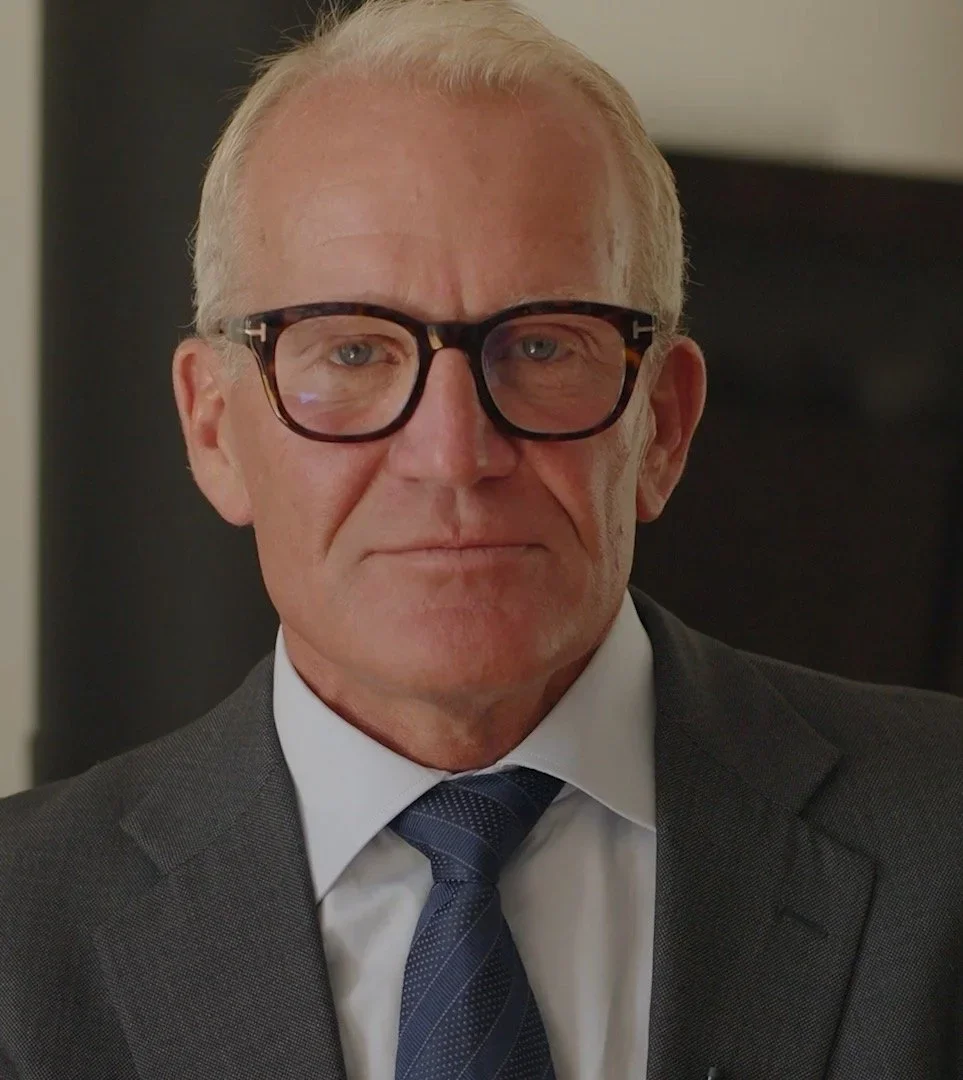
Dag Detter is a Financial Advisor to Governments Worldwide, Former President of the Swedish National Wealth Fund, & a Member of the State of the Union Working Group. From 1998 - 2001, As Head Of The National Wealth Fund Dag Detter Led A Restructuring Of The $70 Billion Portfolio Of Swedish Government-Owned Companies.
In London, New York and Tokyo, the infrastructure conversation is changing. Bankers and investors are no longer talking only about toll roads, airports and utilities in the old sense.
Artificial intelligence has made power, grid access, data centres, fibre networks, water, cooling and land strategically important.
Housing shortages, energy constraints and ageing urban infrastructure are adding to the pressure.
The first wave of deals is already visible. Investors are circling listed utilities, power developers, data-centre operators, fibre networks, renewable platforms and transport assets. Large asset managers are building infrastructure divisions at scale. Strategic operators are looking for control over the physical systems that the next economy will require.
But the larger opportunity may still be hidden in plain sight.
Governments -- national, regional and local -- own or control many of the assets needed to build the new economy: land around stations, ports and airports; electricity networks; water systems; transport authorities; public real estate; rights-of-way; utilities; logistics corridors; and operating companies.
These assets are often visible in daily life but invisible as components in portfolios. They sit across ministries, municipalities, agencies, public authorities, utilities and publicly controlled companies. They are rarely organised in a way that long-term capital can underwrite.
That may be the missing infrastructure opportunity.
Peter Orszag saw part of the story a decade ago. In a 2015 Bloomberg column, then at Citi, he argued that governments paid too much attention to public debt and too little to public assets. He noted that global public commercial assets had been estimated at around $75 trillion -- larger than global public debt -- yet were often badly managed.
A decade later, the Financial Times quotes Orszag, now at Lazard, describing a world in which governments and capital markets are moving closer together as industrial policy and strategic infrastructure return to the centre of dealmaking.
The connection between those two observations may be one of the largest overlooked opportunities in global infrastructure: governments already own or control many of the assets the new economy needs.
Pension funds, insurers, and other long-term investors need assets that generate stable income over decades. Strategic investors need land, power, water, fibre, transport and operating platforms. Cities and countries need housing, energy capacity, water resilience, digital infrastructure and transport systems. Investment banks need origination.
The capital exists. The need exists. The assets often exist.
The missing piece is structure.
For these reasons, the next generation of infrastructure platforms may begin on public balance sheets -- and London, New York and Tokyo are the right places to look.
- - - - - - -
The New Infrastructure Cycle
Bankers in New York and London are suddenly excited about power, data centres, utilities and infrastructure again. And this isn’t just another infrastructure cycle. Something different is happening.
For a long time, people described the new economy as if it were weightless. Software, platforms, cloud computing, artificial intelligence -- all of this sounded detached from physical assets. But the opposite is now becoming clear. AI requires electricity. It requires land. It requires data centres, cooling, water, fibre, substations, transmission capacity, permits and transport access. The same is true for energy security, housing, resilient cities and industrial policy.
The new economy is not floating in the cloud. It is rooted in physical infrastructure.
The first wave of deals is easy to see: data centres, listed utilities, power companies, fibre networks and energy platforms. But behind those assets is a much larger base of public and quasi-public assets that has not yet been structured for capital.
That is the opportunity.
- - - - - - -
The Missing Supply of Investable Platforms
Investors often say there is no shortage of capital for infrastructure. But the bottleneck is not capital - it is structured supply.
London, New York and Tokyo are full of capital. Pension funds, insurers, infrastructure funds, sovereign funds, private equity firms and strategic operators are all looking for long-duration assets. They want predictable cash flows. They want scale. They want governance. They want credible counterparties.
But many of the assets the economy needs are not presented to the market in that form. A city may own land around transport nodes. A transport authority may control valuable station-adjacent property. A public utility may own land, networks and operating rights. A regional government may control ports, airports or water systems. A national government may own electricity companies, rail assets or other operating businesses.
Individually, these assets may look administrative, political or too fragmented. As portfolios, they may become infrastructure platforms.
The shortage is not assets. It is institutions capable of organising those assets into structures that long-term capital can understand.
- - - - - - -
London, New York and Tokyo
Why focus on London, New York and Tokyo?
Because they are not just cities. They are marketplaces.
London remains one of the great financial centres for Europe. Many of the bankers, lawyers, investors and infrastructure specialists who think about European assets are still there. Through London, one can look at Europe’s enormous operational asset base: electricity companies, transport systems, utilities, ports, airports, energy networks, water infrastructure, public companies and real estate portfolios.
New York is the centre of US and global infrastructure capital. The BlackRock-GIP combination is a signal that infrastructure has moved from a specialist alternative asset class to the centre of global asset management. But the question is where the next supply of investable infrastructure platforms will come from. In the US, many of the bottlenecks sit around public authorities, municipalities, transport agencies, airports, ports, water systems and metropolitan land.
Tokyo is different again. Japan has enormous pools of long-duration capital and world-class developers. Japanese life insurers, pension funds and institutions such as DBJ and Norinchukin Bank need domestic real assets that can match long-term liabilities. Yet much of that capital still looks abroad for infrastructure and real estate exposure. Japan may not lack capital or developers. It may lack structures.
So each city gives you a different version of the same problem: capital, assets and need exist, but they are not connected at portfolio level.
- - - - - - -
Tokyo: Start with Investor Demand
Looking at Japan from a banking perspective, I would start with investor demand, not government reform. That is the more practical entry point.
Japanese institutional investors have large pools of patient capital. Life insurers, pension funds and institutions such as DBJ and Norinchukin need long-term, stable, yen-denominated income streams. That is exactly what well-structured domestic real assets should provide.
At the same time, Japan has world-class developers and large public or quasi-public real-estate and infrastructure portfolios, especially in Tokyo and other major urban areas. These assets may not be organised as investable portfolios. They may sit across departments, agencies, public corporations or different levels of government.
So the practical question is not: how do we persuade government to reform everything? The practical question is: if these assets were organised properly, would Japanese developers and institutional investors want to participate?
The sequence should be market-led. First, speak to major developers. Would portfolio-based public land or infrastructure partnerships be attractive? Second, test investor demand. Would life insurers, pension funds and DBJ-type institutions allocate to domestic real-asset platforms if the governance and cash flows were right? Third, do a light asset map of a pilot area to show scale. Only then approach government, with market validation already in hand.
Japan may not lack capital. It may not lack developers. It may not even lack assets. Th missing piece may be structure. That is how this becomes a capital-markets creation opportunity rather than a reform sermon.
- - - - - - -
Public Assets As Structured Supply
To make this work, public assets will need to be structured in the following way.
First, the assets need to be visible as portfolios. Who owns what? Where is it? What is its current use? What could it become? What revenue does it generate? What infrastructure need does it support? Which assets make sense together?
Second, the public counterparty needs to be credible. Investors do not want to negotiate with ten departments, three agencies and a mayoral office that may change direction after the next election. They need a professional institution with a clear mandate, proper accounts, competent board, and the ability to make decisions.
Third, the capital structure must match the purpose. Some assets may support long-term debt. Some may support equity participation. Some may suit concession-type arrangements. Some may work as joint ventures with developers or strategic operators. Some may be better held and improved by a public vehicle.
The point is not to move assets from one balance sheet to another. The point is to create a platform where public assets, private capital and strategic expertise can work together.
- - - - - - -
The Pension-Fund Logic
Housing is a good example.
A city may need thousands of homes. It may own land, planning authority and transport access, but not have the capital or delivery capacity to build at the required scale. A pension fund or insurer may have the opposite problem: it has capital and needs secure long-term income to match liabilities over decades.
That should be a natural match. The public sector contributes land, planning, coordination and public purpose. The investor contributes long-term capital. A developer or operator contributes execution.
The structure can be designed so the investor receives stable income over a defined period, while the city gains housing, infrastructure and perhaps eventual reversion or continuing public participation.
That is not an old-fashioned asset disposal. It is a long-term alignment between public assets and private liabilities. The best transactions are not about one side winning at the expense of the other.
They are about matching needs that already fit.
- - - - - - -
King’s Cross & Portfolio Logic
In principle, the redevelopment of King’s Cross in London is a good example of this.
The important lesson from King’s Cross is not that every city has a King’s Cross.
The lesson is that fragmented assets can become a platform once they are seen together.
For decades, the area around King’s Cross had enormous potential but was held back by fragmented ownership, political disagreement and failed development efforts.
Progress became possible when the relevant interests were assembled into a coherent structure. Owners could retain economic stakes while professional management delivered a long-term development plan.
Portfolio visibility changes the nature of the conversation. An isolated site is just a site. A group of related assets around transport, housing, energy and public space can become an urban platform.
The same logic can apply to station districts, ports, airports, water systems, energy networks or public-company portfolios.
- - - - - - -
London and Europe’s Operational Assets
Across Europe, governments own or influence vast operating assets. Electricity companies, transport systems, railways, utilities, airports, ports, public banks, energy networks and large public-company portfolios.
I do not particularly like the term “state-owned enterprises” because it sounds national and bureaucratic. Many operational assets are local or regional. Some are incorporated companies; others are not.
What matters is that they run services, generate revenues, own infrastructure or control systems the economy depends on.
Within many operational portfolios, there are non-core assets, underused land, adjacent real estate, development opportunities or businesses that could be better structured.
Some are highly attractive to strategic investors. Others might interest infrastructure funds or private equity firms if placed in the right governance and capital structure.
But this is hard to see asset by asset. You need portfolio visibility.
London is still one of the places where European infrastructure capital, advisory expertise and legal structuring come together. That makes it a natural place to develop the idea.
- - - - - - -
New York and the Infrastructure-Capital Machine
New York is where the capital-markets version becomes obvious.
The US has enormous infrastructure needs, but also deep capital markets. It has public authorities, municipalities, states, school districts, transit agencies, port authorities, airports, water systems and vast metropolitan real estate.
The issue is that these assets often sit in separate silos.
At the same time, infrastructure has become one of the most important areas of global asset management. Large investors want exposure to energy, transport, digital infrastructure, water, waste and logistics. The acquisition of GIP by BlackRock is a sign of that broader trend.
The question is: where will the next generation of large infrastructure platforms come from?
Some will come from corporate M&A. Some from energy transition. Some from digital infrastructure. But a great deal could come from public and quasi-public assets if they are organised into professional platforms.
New York is the obvious place to ask that question.
- - - - - - -
Beyond Old PPPs
This moves beyond old public-private partnership models.
The old models were often too narrow. They started with a project, a contract or a single asset. Too often the public sector came to the table without enough information, without a portfolio strategy and without a strong institutional counterparty. That creates bad outcomes. Not always, but often enough.
The new model should start from the public portfolio. What does the public sector own? What capacity does the city or country need? Which assets belong together economically? Which investors are natural partners? What governance is needed so the public owner and private capital meet as equals?
That is a very different conversation. The public sector is being asked to do more, not less.
Housing, water, power, transport, digital infrastructure, resilience -- these all require public capacity. Long-term investors can help provide capital and expertise, but only if the public side is professional enough to structure the opportunity.
- - - - - - -
Transactions Between Equals
Structuring these as transactions between equals means the public sector should not come to the market as a confused asset holder. It should come as a professional owner.
A professional owner knows what it owns. It understands value, cash flows, opportunity cost and strategic purpose. It has governance. It can say no. It can decide whether an asset should be retained, developed, contributed to a partnership, financed differently or combined with other assets.
That changes the dynamic. Investors do not need weak public counterparties. In the long run, weak counterparties create political backlash, legal risk and reputational risk.
Serious investors want clarity, stability and alignment.
The best outcome is when the public owner protects public value and the investor receives a fair, long-term return for providing capital and expertise. That is how both sides win.
- - - - - - -
What’s In It For Investment Banks?
A simple answer: origination.
Banks are constantly looking for mandates: infrastructure finance, capital raising, sovereign advisory, M&A, asset-backed vehicles, restructuring, strategic partnerships.
Public-commercial assets can create all of those mandates, but not if they remain invisible or fragmented.
The opportunity for a bank is not simply to sell an asset. That is too narrow. The opportunity is to help create the platform: identify the asset base, test investor demand, structure the vehicle, bring in strategic partners, design the financing and create a long-term capital-markets programme.
In Japan, that might mean connecting domestic institutional capital with public land and infrastructure platforms. In Europe, it might mean structuring operational asset portfolios for strategic investors. In the US, it might mean metropolitan infrastructure platforms around transport, water, energy or housing.
This is not a small advisory niche. It could become a major origination category.
- - - - - - -
Why Should Governments Care?
Governments should care because they need capacity.
They need more homes, more grid connections, better water systems, more resilient transport, more energy security and more digital infrastructure. They cannot deliver all of this through annual budgets alone.
If they do not organise their assets professionally, two bad things happen. First, opportunities are missed. Land remains underused. Utilities underinvest. Transport assets are not linked to housing. Water systems deteriorate. Second, private capital may still find ways to capture individual opportunities, but without a public portfolio strategy the wider economic benefit is smaller.
A professional public institution can do something different. It can assemble assets, define the public purpose, bring in long-term capital and retain a share of the upside for the city, region or country.
That strengthens the economy.
- - - - - - -
What Would Success Look Like?
In London, success might be a series of European operational asset platforms -- energy, transport, utilities or urban infrastructure -- structured for strategic investors and long-term capital.
In New York, it might be metropolitan platforms that bring together public land, transit, water, ports, airports and housing capacity.
In Tokyo, it might be domestic real-asset platforms that allow Japanese insurers, pensions and public financial institutions to invest at home in assets that match their liabilities.
In all three cases, success means the same thing: public assets become visible, institutions become professional, investors get credible structures, and the economy gets capacity. That is the prize.
- - - - - - -
The Larger Shift
That is the larger shift I am describing. The old infrastructure conversation was about finding money for projects. The new conversation is about creating platforms for capacity. Capital is available. Needs are obvious. Assets exist. The hard part is organising public assets so they can meet long-term capital on professional terms.
Public assets can become investable without ceasing to serve public purposes. That is the central point.
The next infrastructure cycle will not be won only by those who raise the most capital. It will be won by those who can create investable platforms from assets that are currently invisible, fragmented or administratively managed.
London, New York, and Tokyo are the places where that market could begin.
- - - - - - -
Closing
The AI boom has reminded investors that the digital economy depends on physical systems. Power, water, fibre, land, housing, transport and utilities are no longer background infrastructure. They are strategic assets.
But many of these assets are not in the obvious places. They sit on public or quasi-public balance sheets, often fragmented across agencies, authorities, municipalities and operating companies.
The opportunity is not to transfer public assets out of public purpose. It is to create professional public counterparties that can structure those assets into long-term platforms for capital, development and economic capacity.
For investors, this may be the next source of infrastructure supply.
For governments, it may be the way to build capacity without relying only on taxes or debt.
And for cities such as London, New York and Tokyo, it may be the difference between owning assets passively and using them to build the next economy.
——————