Nikhil Kalyanpur on State Power, Kleptocracy, & Global Finance
Nikhil Kalyanpur is an Assistant Professor in the International Relations Department of the London School of Economics.
By Aiden Singh, May 10, 2026
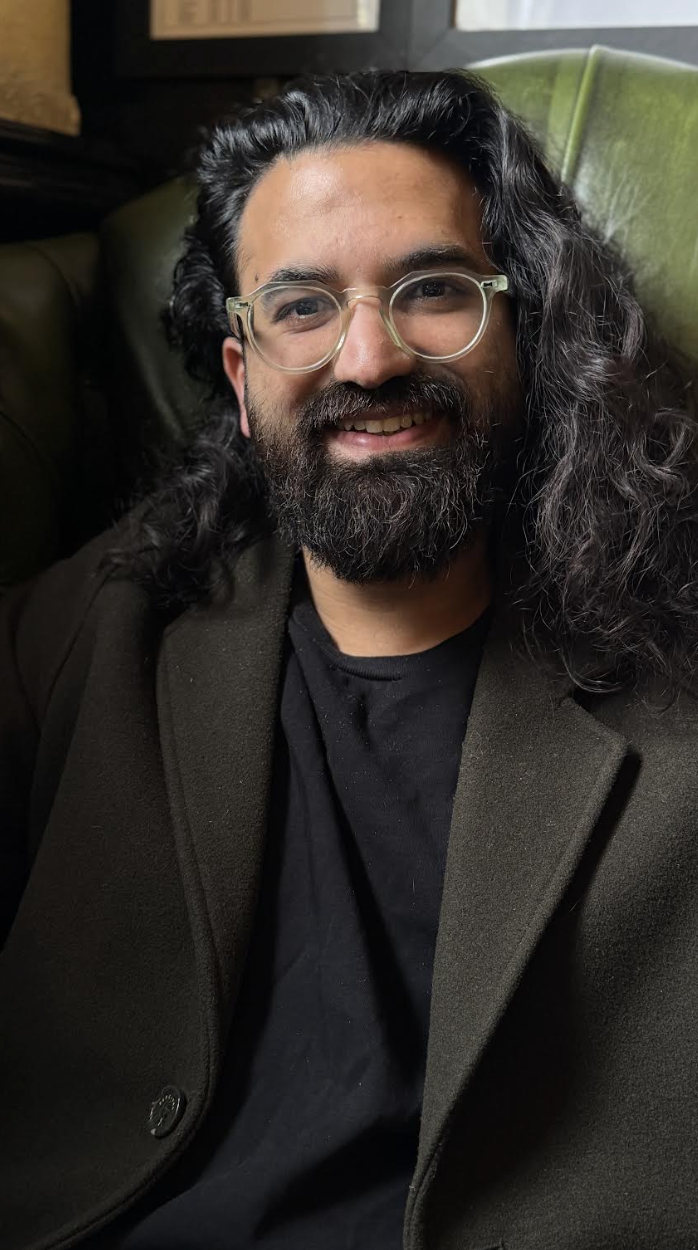
From Plutocracy to State-Dominated Kleptocracy
Aiden Singh: You’ve argued that the world is moving into a new phase of “state-dominated kleptocracy” which is replacing an era of “autonomous plutocratic power”. Could you elaborate on this theory and define that terminology?
Nikhil Kalyanpur: Yes, for sure. I am not a huge fan of some of the terms I come up with from time to time because there are maybe too many syllables. But I also think “state-dominated kleptocracy” seems to have captured people’s attention.
To get at what that means, I think we have to break down the previous 30 or 40 years. At the starting point of globalization, the initial logic was economic efficiency. We were talking about trying to liberalize trade so countries could specialize according to comparative advantage and liberalize capital flows so capital would go where it was most needed and where the most likely returns were going to be. We did not just have ideology or these theories around this - we actually put this into practice through a range of international institutions. There was some informal United States economic coercion, but also a great deal of activity through the IMF, the World Bank, and related institutions, all pushing in the same direction.
What we were doing, de facto, was empowering finance and empowering capital in this process. There was also a whole set of expectations that states would have to behave in quite conventional, similar ways because financial markets would evaluate them in similar ways if they were trying to grow and attract capital. This was true of bond-market lending, but also of foreign direct investment. People wanted strong, credible institutions, while still having a relatively limited state in terms of allowing capital to do what it wanted.
But that is not really the world we ended up with, for a whole range of different reasons. I think the reason that is most underappreciated in political economy discussions is that capital does not have ideology. Capital does not really care about the specifics of policy all that often. You have worked in the financial markets, and you have seen this. You care about the inflation print, you care about fiscal space, you care about quite narrow sets of economic indicators.
So we did not really see outright discipline. But we did see these financial metrics become the core way of disciplining states. There was a disjuncture because governments really believed they had to behave in certain ways and yet the markets were rewarding them in other, narrower ways.
One of the things I think has been happening, slowly but surely, over the last 15 or 20 years, is that states and governments have realized they actually have a lot more political room to move.
One of my favorite papers on this, by Rachel Wellhausen, shows that when governments expropriate a company - which is usually considered disastrous because everyone is supposed to pull their money out - the bond market actually reacts pretty positively because it rewards them for having more revenue now. So yes, equity market people are hurt, but the bond markets are doing quite well.
Or you look at some of these papers that have started looking at the preferences of investors doing foreign direct investment coming from the Global South. Really, what we are talking about often here is China. They are not that interested in democratic institutions, not because they do not like democracy, but because they are often trying to deal with the liability of foreignness. So they prefer putting their money into places that look more like home, which is code for authoritarian or more conventionally transactional politics.
We have had all these misnomers going around and I think governments have been realizing that. But even more importantly, the United States has not been behaving like the neoliberal bastion it has been proclaiming. This has been going on for 10 or 15 years now. It is not new. Whether we go back to the bailouts of 2008 or, more strongly, Trump’s initial election, there has clearly been public appetite for a reassertion of state control. You can also see this in Biden’s industrial policy and, obviously, in a whole bunch of things Trump has done in the last few years.
My point is that there has been a devolution of some of the financial incentives and the main actor in the global economy has been changing its behavior. We have a lot of historical examples showing us that when demand starts to change, the norms and the system change, which creates more room for other actors to behave like the biggest players. One of the ironies of this current moment is that America and China are starting to look a whole lot more similar in how they treat capital.
So whichever great-power patron you are looking at, you are kind of seeing the same governing-model logic that has moved, in my mind, from autonomous plutocratic power into more of a state-dominated, state-controlled kleptocracy. We can talk about what that means and where that goes, but I think that is the fundamental logic.
- - - - - - -
Differences Among Billionaires
Aiden Singh: Why do you describe it as state-dominated kleptocracy in particular? Could you elaborate on this theorized shift from plutocratic to kleptocratic power?
Nikhil Kalyanpur: The core idea here gets into the different types of billionaires.
I think we use the term “oligarch” really loosely as a vestige of 1990s Russia. When you hear that term, you think of Russia. Maybe every once in a while you think of some people in the United States.
But “oligarch” has, in my mind, quite a specific definition and public resonance. It is a person who makes their money through the private sector, has accumulated a great deal of wealth, and is then able to take that wealth and use it to influence the political process.
I think we were very much in that more conventional oligarchic world for many, many years. And I would argue that the United States has been in that world long before Trump. That is not to say that the public does not matter. But there is a veto player in the form of the super wealthy that exists. Campaign finance cannot be ignored, and then you add in the media which is also a major political player.
But I think we are in a situation, particularly in the United States, where we are seeing a transition start to occur, where we are moving from this capital-dominated world to a more state-dominated world. Think of 1990s Russia to 2025 Russia. That is the oligarchic world moving to the kleptocratic Putin world.
That leads to a very different set of people being able to stay rich and a very different set of incentives on how to make your money.
In the traditional private-capital world, oligarchs become a threat to a state that is becoming empowered because they are fundamentally not reliant on the state for their money. This is why oligarchs are able to influence politics over the years. In the United States, that has been the dominant system.
But now, if you are a would-be authoritarian are you really going to trust a bunch of highly independently powerful billionaires to exist, who can in theory fund a coup, fund an opposition party, or fund independent media at their whim? If you are Vladimir Putin, or Chávez, or Orbán for that matter, your answer to that has been absolutely no. Often you first go after the media moguls and then you go after the biggest hard-industry players and hope everyone else gets in line. This is a very standard path, and America looks, in my mind, very much headed towards that.
We did not call it this, but TikTok was expropriated. That has already happened and no one likes to talk about it that way. The Anthropic situation is also very intriguing.
What I would say is that the only people who are not a real threat to the kleptocratic order are fellow kleptocrats. If you are a state trying to make money for itself, or a government leader trying to make money for yourself, the only people you can really trust are the people who rely on you for their revenue. But you also cannot really trust them if they have gotten too much revenue from you, because then they have their own independent wealth as well.
So you are in this situation where I think we are going to see more governments trying to cultivate their own band of elites that are subservient to them, like what Vladimir Putin did in the 2010s in Russia. That does not mean you do not have private wealth. I am not saying that we are entering a world in which that is no longer the dominant force. But that is also where a lot of the friction is going to come from.
This is what I call tycoons, the Jack Ma-types of the world, where you have a great deal of private wealth in a state-dominated, more kleptocratic society. They have tremendous wealth but we know everything is not going according to their preferences because there is regulation on them and there are limits on where they can move their money.
Their incentive at that point is to potentially take on the state. They may not even want to do it. No one really wants to get into that fight. But the state cannot really trust you not to do it if you have your own wealth.
Aiden Singh: When we talk about billionaires, there is a tendency in politics, especially on the left, to treat them as a class - as a unified and coherent group. And you started alluding to the media, heavy industry, and these different segments of the economy that produce billionaires and are run by billionaires.
In the United States, we can talk about Rupert Murdoch owning Fox News, who is has very different and interests than, say, a the billionaire CEO of - name your tech company. Their sources of power are different. Their sources of income are different. And their relationship to the state are different. Could you explain your way of thinking about the different types of billionaires?
Nikhil Kalyanpur: You can think about the capital-dominated world and the state-dominated world.
In a capital-dominated world, we are talking about the oligarchs. Those are the people who have private means of making money through actual private enterprises, whether that is finance, tech, real estate, or whatever it may be. That is what they are. They are oligarchs in that situation.
They can still make a lot of money through the government in that world as well, and many of these actors also do have government contracts. But in that world, they are still more of a crony. Their incentive structure is not to shift the system too much. What they are worried about is their contracts being taken away from them.
In the private sector, when you are an oligarch, you are not worried about the state that often, because your assumption is that you can control or influence its decision-making.
You are worried about the other oligarchs. This is the AI people eating each other alive. That is what that is.
And then you have this other world, this state-dominated world, where you have the more kleptocratic actors we were referring to before, making their money through the state. In a state-dominated world, the state is not really worried about you because, again, they know where the bread is buttered. They know how they are going to keep this revenue going.
By contrast, if you are an independently wealthy person in that situation, that is when you have the most fear. That is the most precarious billionaire position, and that is the one people like Elon Musk are resisting falling into now, even though they kind of see the writing on the wall and know it is headed that way.
Now, all of that said, this is not some perfect framework that captures every single thing in the world. The point you brought up is really important. At the end of the day, the fundamental power of money as a political resource is that it is fungible. You can use money to get all those other things we say matter. You can buy up media stations. You can start a Substack and get 100,000 subscribers overnight, like Michael Burry did a couple of months ago. You can get an audience very quickly as a function of your wealth, or influence people’s views very quickly as a function of your wealth. That is par for the course under democracy. There are very few restrictions on that.
By contrast, if you do that in a more state-dominated autocratic setting, that is what gets you in trouble very quickly. I actually have this working idea that I am still trying to fully develop. It is what the next book I am working on is about. I think the value of money flips in these capital-dominated and state-dominated societies, or in simpler terms, in democratic versus autocratic settings. Basically, the things that make you powerful in a democratic setting are the things that make you a threat in an autocratic setting. That is what I have been playing with over the last few months.
- - - - - - -
Trump as an Accelerant
Aiden Singh: How do you place himTrump in the context of this change in phase that you are talking about.
Nikhil Kalyanpur: I think we should see him as an incarnation of this switch toward more state domination. Not because he was necessarily the one ushering it in. I think we have to see structural forces making it feasible for him to get elected. And we have to see structural forces making it possible for the presidency to gain a lot of power without people really wanting it to and then realizing what could really be done with that.
So I think we are in a situation where he definitely wants control. That was what he has wanted over and over again, the spotlight and control, and often taking control gives you the spotlight. His desire is to move toward a more conventionally state dominated setting.
The reason I think he praises Putin and China is not just weird propaganda, or people theorizing about what the Russians have on him, or that he is a Russian asset. I think it is because he respects the allure, the power that they can wield when they so choose.
What is really interesting is that America is not totally an autocracy yet. There is no doubt that I think it is on that path, but I would not at all call it an autocracy yet because we are going to have a serious midterm election in a few months. I do expect that we will still have a 2028 election, despite the gloomier predictions.
Aiden Singh: So you see Trump as an accelerant then in this scenario?
Nikhil Kalyanpur: Yes, I think that is the right word. We were already on these paths, and he showed us the extremes of what these paths can look like. Once you move a path toward an extreme, even if you later move back toward normal, you are not going back to that center. The Overton window shifted, basically.
- - - - - - -
Evolving Global Institutions
Aiden Singh: What does all of this mean for the existing institutions of global governance then?
Nikhil Kalyanpur: This is something I have been thinking about as well. I mentioned this new book I am working on. The book I am finally bringing out this summer, after almost a decade, is much more about some of those institutional questions. I want to pull us back again to what the point of globalization was.
The point was to create relatively seamless economic integration and seamless economic exchange. A lot of our institutions were set up with the mandate and the prerogative of pushing that forward.
That is not to say that institutions cannot change, though. The IMF is always an interesting example, because in the 1960s and 1970s the IMF was just tracking currencies, and that was its main job. Then it became this giant crisis fighter. It has taken on a much larger role.
So we should not expect international institutions to die. I expect them to evolve. The ones I have had my eye on are the ones that are less about mediating state to state interaction and much more about mediating state to private and private to private interactions. We have this very large international investment regime with roughly 3,000 different treaties that allow multi-national corporations to challenge their host governments on grounds of different forms of expropriation. Bilateral investment treaties are part of this.
Every couple of years, these cases get a lot of scorn in the international media when a big one pops up. They are not insignificant. Billions are often on the line. But what I and a couple of my co-authors have shown is that a lot of these cases are not, in fact, multi-national corporations against their home state. They are domestic oligarchs against their home state, or former deposed domestic oligarchs against their home state, trying to find a way to get their money back.
The most famous example is Mikhail Khodorkovsky and his multi-decade fight against Russia, but he is not alone. If I am right that we are going to see more and more of a shift from capital-dominated to state-dominated settings, that will create a reshuffling in the billionaire class. Some will lose power and get caught up. In those situations, you want to find a way to get your money back. So you go abroad, use a shell company, and claim a foreign status in your own country. Usually, you can find a way to sue the government.
There is also the flip side of that. More than 20 different countries have sued an oligarchic plutocratic actor from their country, not at home, but in London. That is because London is very much the center of the commercial litigation universe. New York is obviously very important, but America is always more parochial than it realizes. America is often handling Latin American disputes, whereas the rest of the world goes to London.
This is partly because of history, the spread of English law, the neutrality issue, the evolution of hegemony, and a whole range of things around expertise, long histories of common law, and a lot of very apolitical factors that have produced a natural expectation that London is where conventional transnational disputes get settled. If I am a trader in the Netherlands and you are a trader in Ethiopia and we have a conflict, we go to the London courts. That is the basic logic.
But we have also seen governments, through their enterprises or even through private sector proxies, file some of these cases against people who have run away from their country in order to get their hands on wealth that sits abroad. We did create that very pro-capital order, where you could move your money abroad and hide it effectively, and your government may not know what you own. They want to find out.
- - - - - - -
Why London Became a Global Financial Hub
Aiden Singh: How is it that London came to occupy this central role in international finance and law?
Nikhil Kalyanpur: It is a wild set of stories, and I would say a number of complementary ones. A lot of this goes back to the histories of the 1960s, especially the role of the Eurodollar market, and how London was left, with not much else going on. So the City of London eventually figured out a series of loopholes in order to help issue offshore financial dollars.
The famous story behind this is who got the first offshore financial dollar. It was a Russian state-owned enterprise in the midst of the Cold War. It is quite remarkable.
Oliver Bullough writes about this in Butler to the World (2022). It is a really strong account.
London has always placed its emphasis, or at least I can speak to the postwar period, on being the place you turn to when you need international exchange done. Not just when no one else is willing to do it, although that is part of it, but when you need legitimacy for that action. London built its reputation, especially through the judiciary, around the idea that it is the trustworthy and independent player in the global economy.
There is also an important economic side to this that cannot be ignored. Geographic centrality does really matter here. It is a strange combination of factors. London is not America, and people outside Europe do not always fully trust America. That has been true since the 1960s. It is not new. You talk to any elite in the global South, and they do have misgivings about what America might do to them. Maybe that is just the esoteric issue of taxation, but who knows.
Because London became central, and because English law spread through various colonial factors, there is also this impressive centrality for London in the way judgments get enforced. Enforcement works through a couple of different mechanisms. Let’s say you and I have a fight. We are from different countries, and we decided to fight in London. If I win the case against you, the problem is that maybe you only have a small fraction of your money in London. But I can get that money.
But then you may have hidden money in the British Virgin Islands (BVI), or the Cayman Islands, or Liechtenstein. That is pretty standard oligarchic and plutocratic practice. Well, guess where you can get a judgment and get it enforced. You can take a British judgment and get it enforced in the vast majority of countries in the world.
By contrast, American judgments do not get enforced nearly as much because America does not do reciprocal enforcement, whereas the U.K. does. A Russian judgment is not going to get you very far at all in the BVI or the Cayman Islands, because no one trusts the judiciary.
This is a mix of formal and informal mechanisms. There are formal treaties that do some of this work, but there are also norms in judicial practice that recognize whose judgments are likely to be accepted and whose are not. A lot of these fights happen in the shadow of coercion. Most disputes do not actually get to the point where we are moving judgments around the world in order to get assets, because that takes years. Usually the person involved wants to continue doing business, so settlement happens in the face of decades of legitimacy and expectation.
One thing I think is really underrated is the role of London in the insurance markets, because London basically is the insurance market. You may remember the first couple of days of the Russian invasion of Ukraine, when global shipping shut down because the U.K. said it was not going to insure Russian goods.
There are all these hidden forms of economic power that the U.K. still has, but it is also unbelievably afraid to use them.
Aiden Singh: It’s incredible that this very small island country in the North Atlantic plays this central role in the world of trade, finance, insurance, and law. Just because of the way history played out, it became this insurance hub, this legal hub, and this financial hub.
Nikhil Kalyanpur: You have a situation where a lot of economic exchange makes much more sense when you have a hub. When you are the major economic power, it is quite natural for you to become the hub for those transactions.
Before World War One, when we first see the emergence of global finance and global capitalism, there is one player that is willing to act as that coordinator and, of course, take a bit off the top of every transaction. The only people with the incentives and the connections to make that work were the City of London.
Then the United Kingdom falters as an empire, but all of that stuff keeps working. So why would people switch and make this really costly decision about centralizing elsewhere?
I am not saying America does not have a bunch of centralized power. It does. But it is the more banal stuff that happens in the U.K. context. America took the shinier stuff, the clearly more profitable stuff.
- - - - - - -
Lawsuits as Investments
Aiden Singh: An interesting part of international law that you have looked into is its financialization after the 2008 Financial Crisis. Why has this taken place and what are the implications?
Nikhil Kalyanpur: This is one of those moments where, when I first started reading about it in late 2014 or 2015, your jaw drops, but then four seconds later you think, obviously this was bound to happen.
What I am really talking about here is the large growth, especially in the United Kingdom and the United States over the last 15 years, of what is referred to as a third party financing system. This has a long history, but it really exploded after 2008. A third-party investor can put money into the hands of a claimant and then the claimant can file the case. In exchange for financing the case, the investor gets some percentage of the returns.
In the United States, readers might know this best from the Gawker lawsuit. That is where Peter Thiel first became a public persona, when he effectively sued Gawker out of existence.
Historically, the rationale for this was what we might call access to justice: a big corporation is abusing a small actor, so the small actor needs support. Maybe it is a hedge fund, or maybe it is some NGO, but somebody backs them and makes the fight possible, so the big guy cannot simply crush the little guy.
And yes, that does happen. It happens on the margins. It is real. Some of the cases against Exxon involving Nigerian workers have been funded by a hedge fund because there is money to be made.
But a lot of these cases exist for a two-fold reason. First, after 2008, you have a situation where there are a lot of well-meaning lawyers and a lot of hedge funds that do not know what to do. There is not enough market activity, and returns in the equity and bond markets are capped for a handful of years. So they have to find another place to try to make money.
The famous line from hedge funds is that they want uncorrelated returns. What is really uncorrelated to macroeconomics? A lawsuit. It can take years to resolve, and it is happening on its own timeline because that is how the law works. You can sell that to clients by saying, look, I may get really big returns. Yes, it will take a while because lawsuits take a while, but we do not need all of them to work. We need a few to hit really big, because the outsized gains in these cases can be enormous.
Take the investment treaty world we were talking about before. If you have been expropriated, some of these lawsuits are worth one or two billion dollars. How much does it cost to fund a lawsuit against them? Maybe $50 million on the expensive side. So you can get truly outrageous returns if only one, two, three, or four out of forty or fifty cases hit.
Why does this matter? It matters on several levels. Here is another example. There is a big intra-russian London dispute happening right now, a divorce case. The male oligarch, or kleptocrat in my terminology, is the one being sued in London. London has incredibly pro-claimant divorce precedent, so it is effectively the divorce capital of the world as well. That dispute is being funded by a hedge fund, with the wife receiving support in exchange for a percentage of what she wins.
But what if instead you are a government in Spain that puts in place renewable energy incentives and later realizes they are not working, so you pull them out and then get sued? That is happening through third-party funders too.
So there are a bunch of these cases where capital finds new ways to constrain the state by investing in lawsuits.
There are also actors who own Venezuelan debt and who won a bunch of cases against Venezuela last year. And the Financial Times has reported that they are expecting serious payouts now.
The lawsuits take years and the government being sued is not the same government ten years later, so the incentives do not really work to clamp people down. But they do create a major shadow over the fiscal space of a country.
——————
Editing by Harpreet Chohan.